ESPRESSO MORNINGS
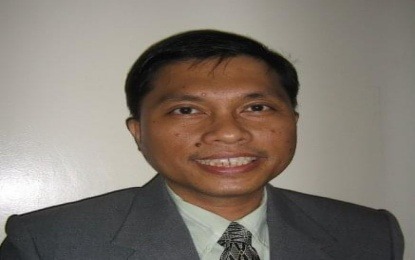
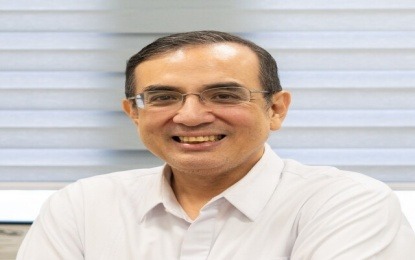
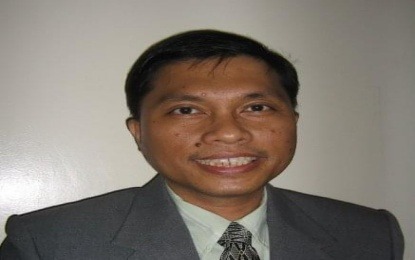
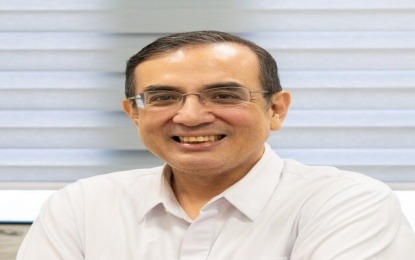
By Joe Zaldarriaga
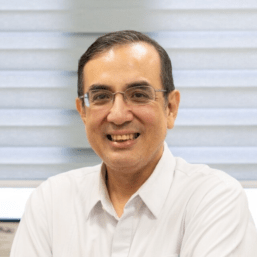
He was the architect behind Meralco’s most celebrated milestones in the field of communications— steering the company to five-time Company of the Year honors at the Philippine Quill Awards and leading the only PR team ever named Team of the Year in the history of the Anvil Awards.
Manong Joe’s leadership also extends as a respected member of the Board of Trustees for the Public Relations Society of the Philippines (PRSP), concurrent with his role as Chairman of the International Association of Business Communicators Philippines (IABC Philippines) where he also served as its President.
Manong Joe is a distinguished awardee of the medallion of honor and scroll of commendation from the University of Manila, owing to his years in public service as a communications professional. He shares his insights through columns in renowned publications, including The Philippine Star’s The Z Factor, and Philippine News Agency’s ESPRESSO MORNINGS.
The persisting crisis in the Middle East threatens long-term global economic instability as countries face the risk of sustained inflation, chronic energy price shocks, and disrupted supply chains.
With global fuel prices unlikely to normalize until the end of 2026 due to the lingering conflict, households across the Philippines are already feeling the squeeze.
The government has launched a string of interventions to ease the direct impact of the crisis on Filipino households through holding off price increases of basic commodities until May 10, distribution of aid or ayuda to public transport motorists, fare discounts in rail transport systems, service contracting schemes for public transport operators, and the suspension of excise tax on select petroleum products, such as LPG and kerosene.
Even with these efforts, the country still faces risks. There is the threat of stagflation, which is when the economy is not growing, but prices are still going up. This can hurt the finances of a lot of households, especially those in the middle class who are already struggling to make ends meet.
When we talk about the crisis, we often talk about things like subsidies and loan programs. One thing that we do not talk about enough is water security. We talk endlessly about fuel subsidies and food prices, but the cost and availability of clean, safe water rarely make the headlines.
The Department of Environment and Natural Resources (DENR), through its Water Resources Management Office (WRMO), has been working to change this. While debates rage in Congressional hearings, the WRMO has rolled out projects that are already transforming lives in barangays far from Metro Manila.
Take the small island communities, once forced to pay PHP50 to PHP70 for a five-gallon container of drinking water. Today, thanks to filtration systems installed by WRMO, families pay only PHP20 to PHP25. In some water districts, refilling station equipment has cut prices even further, to just PHP15. For households living on tight budgets, these savings mean more food on the table, more medicine bought, more dignity preserved.
By the end of 2026, WRMO projects are expected to provide safe water access to nearly 450,000 individuals nationwide. These numbers represent children spared from waterborne diseases, farmers able to drink from a reliable source, and families freed from the crushing costs of survival.
The initiatives go beyond affordability. The Infiltration Gallery Project, for example, taps subsurface river flows to create climate-resilient water sources. Geo-resistivity surveys guide deep-well projects with science, reducing risks and ensuring success. These are not stopgap measures; they are forward-looking solutions designed to withstand the pressures of climate change and population growth.
Without this, the promise of equitable water access risks becoming another unrealized aspiration.
Environment acting Secretary Juan Miguel Cuna has lamented that the department was allotted only PHP485 million for 2024-2026, when what is truly needed is PHP200 billion to ensure water security.
This is where the conversation must shift. Water security must be recognized as central to economic resilience, public health, and national stability. Rising fuel costs will inevitably affect water treatment and distribution.
If the government can mobilize billions to cushion fuel shocks, surely it can prioritize the very resource that sustains life itself.
A whole-of-government and whole-of-society approach is needed to harmonize water governance. Industry groups, local governments, and the private sector must collaborate with the DENR, not compete with it. Citizens, too, must demand accountability – not just for cheaper fuel or food, but for the assurance that every Filipino, regardless of geography or income, has access to clean water.
In times of crisis, we often look to grand fiscal policies for security. Yet resilience is often built in the streets by the communities themselves. Water security is not just a technical issue, and it is high time we treat it as such.