By Darryl John Esguerra
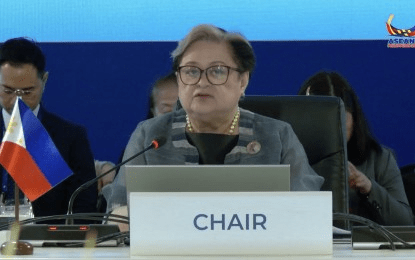
LAPU-LAPU CITY, Cebu – The Philippines on Thursday called for stronger regional unity and resilience as the Association of Southeast Asian Nations (ASEAN) faces growing geopolitical and security challenges, cybersecurity threats, and disruptions caused by the worsening crisis in the Middle East.
Opening the 31st ASEAN Political-Security Community (APSC) Council Meeting here, Foreign Affairs Secretary Ma. Theresa Lazaro, the meeting’s chair, said ASEAN must remain a “primary driving force” in shaping the regional architecture despite an increasingly complex global environment.
She cited developments in the Middle East, cybersecurity threats, transnational crime, and maritime security as among the pressing concerns confronting the region.
“We continue to wrestle with the deepening impacts of the situation in the Middle East on energy, food, and safety of our peoples,” Lazaro said.
The Foreign Affairs chief emphasized the importance of preserving multilateralism and strengthening cooperation under the ASEAN Political-Security Community pillar.
The meeting forms part of the 48th ASEAN Summit and Related Meetings hosted by the Philippines. It convenes leaders to advance regional peace, stability, and cooperation at a time of evolving regional and global challenges.
The Philippines, which chairs ASEAN this year, is pushing initiatives centered on regional stability, maritime cooperation, food and energy security, and the protection of Southeast Asian nationals.
Lazaro underscored the need to strengthen maritime cooperation, including support for the proposed establishment of an ASEAN Maritime Centre in the Philippines.
“As a region linked by our seas, the maritime domain remains central to our pursuit of stability and prosperity,” she said. (PNA)