ESPRESSO MORNINGS
By Joe Zaldarriaga

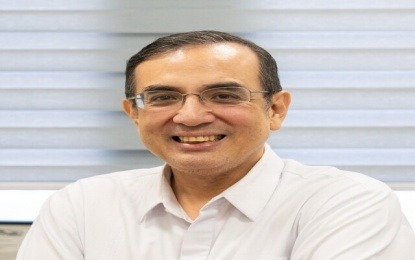
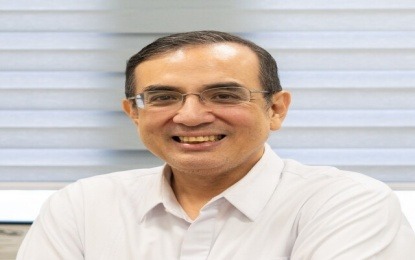
He was the architect behind Meralco’s most celebrated milestones in the field of communications— steering the company to five-time Company of the Year honors at the Philippine Quill Awards and leading the only PR team ever named Team of the Year in the history of the Anvil Awards.
Manong Joe’s leadership also extends as a respected member of the Board of Trustees for the Public Relations Society of the Philippines (PRSP), concurrent with his role as Chairman of the International Association of Business Communicators Philippines (IABC Philippines) where he also served as its President.
Manong Joe is a distinguished awardee of the medallion of honor and scroll of commendation from the University of Manila, owing to his years in public service as a communications professional. He shares his insights through columns in renowned publications, including The Philippine Star’s The Z Factor, and Philippine News Agency’s ESPRESSO MORNINGS.
Last week, the Department of Trade and Industry announced that grocery stores have agreed to hold off any price increase for basic commodities until May 10 as consumers cope with the local impact of global volatility caused by the Middle East crisis.
This follows a string of government interventions to ease the direct impact of the crisis on the pockets of Filipinos—distribution of aid or ayuda to transport workers, fare discounts in rail transport systems, service contracting schemes for public transport operators, and the suspension of excise tax on select petroleum products such as LPG and kerosene. The Bangko Sentral ng Pilipinas has also approved the grant of temporary grace periods for loan payments of affected borrowers subject to bank assessment.
While helpful, these reprieve measures do little to shield households from sustained economic pressure. It also highlights a deeper problem: the Philippines remains extremely vulnerable to external shocks.
Headline inflation surged to 4.1 percent in March 2026, the highest in nearly two years, driven primarily by a 9.9 percent spike in transport costs due to oil price shocks and higher food prices. These figures illustrate how global volatility translates directly into higher fares, food costs and household expenses.
Aid is only a stopgap measure. What Filipinos need are structural solutions to build resilience so that our economy is not at the mercy of global volatility. By embracing structural reforms, policymakers can strengthen our economy so that shocks are absorbed instead of amplified.
Murang Kuryente Party-list Rep. Arthur Yap’s recent proposals of agricultural credit risk-sharing and streamlined subsidy delivery are among the initial practical measures that the government can implement to respond directly to today’s pressures.
As I mentioned in my previous column, using the Maharlika Investment Fund (MIF) as a financial backstop would encourage banks to lend to farmers so that they don’t have to turn to informal lenders. Such a move should be viewed as an investment in national food security, especially since the fund has identified agriculture as one of its strategic pillars for public investment direction this year.
We have to support our agriculture sector not only for food security but for economic resilience.
Equally important as well is support for the middle class—an often-forgotten and squeezed majority in the country in times of crises, who, I may add, is becoming more vulnerable.
One form of support that would directly translate to benefit for the middle class is relief in terms of household expenses. This can be done through the integration of subsidies in the electricity bills of families consuming between 51 and 300 kWh each month. An average household typically consumes 200 kWh per month. By doing so, the government need not form another system of aid distribution and can use the current system of power utilities and cooperatives.
Another area that demands urgent reform is fuel price volatility. Addressing the issue of fuel price hikes driven by the replacement cost scheme used by petroleum companies, Yap proposed that government financial institutions such as Land Bank of the Philippines and the Development Bank of the Philippines establish a syndicated loan facility for oil companies. Under this arrangement, companies would be able to finance fuel inventory purchases over time, reducing the need to immediately pass on higher costs to consumers during periods of price volatility.
This is not about shielding corporations—it is about buffering Filipino households from the sudden shocks of global oil markets. By smoothing out the cost of inventory, consumers are spared from overnight price hikes that ripple across transport fares and food prices.
‘Ayuda’ may provide temporary relief but it is not enough to build resilience. Agricultural credit risk-sharing, fuel price stabilization and streamlined subsidy delivery are solutions that can be put into action to initiate structural reform.