ESPRESSO MORNINGS
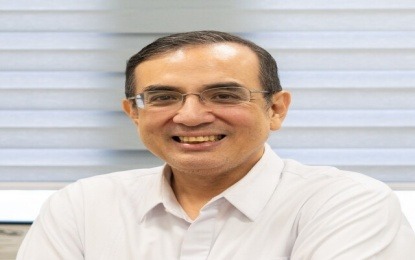
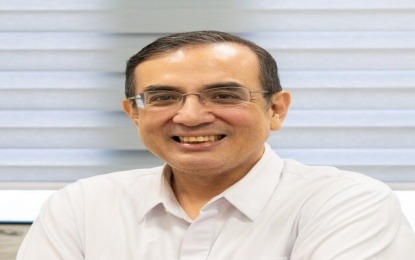
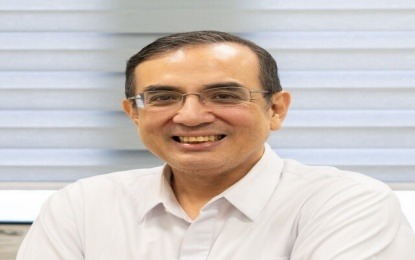
By Joe Zaldarriaga

He was the architect behind Meralco’s most celebrated milestones in the field of communications— steering the company to five-time Company of the Year honors at the Philippine Quill Awards and leading the only PR team ever named Team of the Year in the history of the Anvil Awards.
Manong Joe’s leadership also extends as a respected member of the Board of Trustees for the Public Relations Society of the Philippines (PRSP), concurrent with his role as Chairman of the International Association of Business Communicators Philippines (IABC Philippines) where he also served as its President.
Manong Joe is a distinguished awardee of the medallion of honor and scroll of commendation from the University of Manila, owing to his years in public service as a communications professional. He shares his insights through columns in renowned publications, including The Philippine Star’s The Z Factor, and Philippine News Agency’s ESPRESSO MORNINGS.
The ongoing conflict in the Middle East has once again underscored the importance of the Philippines’ energy security as volatility in global fuel markets persists and uncertainty lingers.
As oil prices surge and supply chains tighten, our country, heavily reliant on imported fuel, finds itself exposed to price shocks that ripple through the economy and into the daily lives of ordinary Filipinos. Last week, the Philippine peso sank to a record low of PHP60 per dollar, which magnified the cost of imported oil and aggravated inflationary pressures on businesses and household budgets. We see how global instability can quickly translate to local challenges.
It is important, however, to emphasize that the impact of the Middle East conflict is not isolated to the Philippines. Across the region, governments – many of which are dependent on imported oil and gas – are rushing to ensure fuel supply and somehow shield their people from price shocks. Thailand, for instance, has instructed government offices to set air conditioner temperatures to 26°C for energy efficiency, while Vietnam is calling on its people to use public transport to save fuel.
In the case of the Philippines, the Institute of International Finance has ranked our country among Asia’s most energy-vulnerable economies, mainly due to our reliance on oil imports and limited fiscal buffers. Nomura Global Markets Research, meanwhile, warned that sustained high oil prices could push inflation beyond the Bangko Sentral ng Pilipinas’ target, forcing painful monetary tightening. These assessments underscore what we already know: our energy dependence is not just an economic liability, it is a national security risk.
In the short term, our government has implemented stopgap measures to somehow cushion the impact of soaring fuel prices on the Filipino people. These include a four-day onsite work week for government workers and some in the private sector (Meralco has adopted a similar practice in support of the government’s call), lower fares on metro train lines, discounted tolls for public utility vehicles (PUVs), and financial assistance for PUV drivers.
President Ferdinand R. Marcos Jr. has also called for energy conservation and efficiency, especially since the Middle East conflict coincides with the dry season, when power demand historically peaks.
In these uncertain times, we all play a role in helping ensure stability and security. Simple actions, such as using natural light whenever and wherever possible, ironing clothes in bulk, and optimizing temperature settings for air conditioners, can translate to significant energy savings when collectively practiced. Energy efficiency is not just about cutting costs; it’s also a form of “bayanihan” to strengthen our resilience against external shocks.
Looking beyond the Middle East crisis, pursuing self-sufficiency should be a national strategy and our long-term salvation. This means accelerating renewable energy development, ramping up on the exploration of domestic fuel sources, modernizing our grid, and aligning policy, investment, and consumer behavior toward a common goal: national energy security.
The Middle East conflict is a crisis we cannot control, but it is also a wake-up call we cannot ignore. It has exposed the need to improve our current energy model and challenged us to rethink our dependence. The weakening of the peso, the surge in fuel prices, and the strain on household budgets are stark reminders that imported energy comes at a high cost. But they are also reminders that we have the power to change course.
The Philippines has long been resilient in the face of adversity. Efficiency is our shield. Self-sufficiency is our salvation.
Moving forward, I hope that this incident moves us to aggressively accelerate our transition to cleaner energy, not only for sustainability goals but more so, for national energy security.