By Priam Nepomuceno
MANILA – The Enhanced Defense Cooperation Agreement (EDCA) sites in the Philippines pose no threat to any country, the spokesperson of the Department of National Defense (DND) said on Monday.
DND spokesperson Assistant Secretary Arsenio Andolong said some groups are using the Middle East conflict to sow “fear and apprehension” among Filipinos.
The United States and Israel launched air strikes on Iran on Saturday, with damage spreading to neighboring nations like Bahrain and United Arab Emirates.
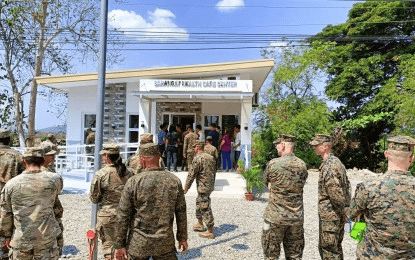
“Certain groups are using the events in the Middle East to justify their disdain for EDCA sites in the Philippines, completely ignoring the fact that EDCA sites are not US bases, but Philippine facilities, developed and used jointly for training, HADR (humanitarian assistance and disaster relief), and the defense and security of our country,” Andolong told the Philippine News Agency.
“It must be stated, however, that the hostilities are confined to the Middle East. The Philippines is not a participant in the theater of conflict. As such, there is no credible direct threat to the Philippines or facilities therein. Iran launched attacks on US facilities in countries that it shares maritime or land borders with,” he added.
Andolong said EDCA sites in the country are not being used to launch or stage assaults against another country.
“President Ferdinand R. Marcos Jr. has made it clear that the EDCA sites will not be used for offensive action,” he said, pointing out that that these facilities play an important role in the capacity and capability building of the Armed Forces of the Philippines (AFP).
National Security Council (NSC) Assistant Director General Cornelio Valencia Jr. also clarified that EDCA sites are not US military bases.
“There are no American military bases in the Philippines. The sites referred to under the EDCA are Philippine military bases that remain under the full ownership, control and management of the AFP,” he said.
Valencia said the NSC, in coordination with the AFP, DND and other concerned agencies, continues to monitor developments in the Middle East.
“At this time, tensions remain confined to the region and there is no verified direct threat to Philippine territory, including our military facilities. We urge the public to remain calm, exercise discernment and be vigilant against disinformation,” he said.
AFP spokesperson Col. Francel Margareth Padilla said EDCA sites remain AFP installations.
“Access granted to US forces is rotational and primarily geared toward interoperability, logistics prepositioning, disaster response and humanitarian assistance,” she said in a message to PNA.
Padilla said these arrangements enhance the AFP’s defensive readiness and its capacity for HADR, rather than diminish the country’s security.
“It is also worth noting that the Philippines’ strategic relevance in the region is shaped by geography — particularly in the context of developments in the South China Sea and the Taiwan Strait — regardless of EDCA. Strengthening alliances and improving our defense posture does not create vulnerability; it contributes to deterrence, preparedness, and stability,” she said.
Padilla urged the public to remain discerning and to rely on verified information.
“Security matters require calm assessment, not speculation. The AFP remains focused on its mandate: Defending our sovereignty, ensuring territorial integrity, and contributing to regional peace and stability,” she added. (PNA)