ESPRESSO MORNINGS
By Joe Zaldarriaga
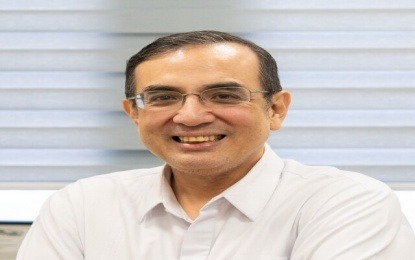
He was the architect behind Meralco’s most celebrated milestones in the field of communications— steering the company to five-time Company of the Year honors at the Philippine Quill Awards and leading the only PR team ever named Team of the Year in the history of the Anvil Awards.
Manong Joe’s leadership also extends as a respected member of the Board of Trustees for the Public Relations Society of the Philippines (PRSP), concurrent with his role as Chairman of the International Association of Business Communicators Philippines (IABC Philippines) where he also served as its President.
Manong Joe is a distinguished awardee of the medallion of honor and scroll of commendation from the University of Manila, owing to his years in public service as a communications professional. He shares his insights through columns in renowned publications, including The Philippine Star’s The Z Factor, and Philippine News Agency’s ESPRESSO MORNINGS.
During the recent silver anniversary of the Boao Forum for Asia, a high-level international forum for leaders from different sectors, the region’s positive economic outlook was highlighted, reinforcing its role as a key driver of global growth.
The region’s economy, based on the Boao Forum for Asia report, is forecast to expand to 49.7 percent this year from 49.2 percent in 2025. The report further pointed out that “China and ASEAN (Association of Southeast Asian Nations) continue to stand out as the region’s twin ‘anchors of stability.”
For countries in Asia, this momentum offers a rare opportunity to reposition themselves within shifting supply chains and emerging industries. The Philippines, situated at the heart of Southeast Asia, is uniquely placed to benefit—if it acts decisively. Murang Kuryente Partylist Rep. Arthur Yap has emphasized that the country must not remain at the margins of global supply chains. As Asia undergoes a major economic transformation, Yap argues that energy security, industrial upgrading, and regional cooperation must be the Philippines’ top priorities.
His point is well taken. The Philippines should ride Asia’s growing economic wave and move into higher-value sectors such as semiconductor packaging, advanced manufacturing, and technology services to capture the benefits of the region’s development.
But this would only be possible if infrastructure challenges such as high electricity costs, inefficient logistics, and gaps in workforce skills are addressed—roadblocks that Yap identified as key barriers to investment.
The key is to deepen engagement with regional partners while strengthening domestic foundations. To compete globally, we must first strengthen our local infrastructure.
As Yap pointed out: “Ensuring affordable and reliable energy for Filipinos requires us to pursue all viable options, including strategic partnerships that can stabilize supply and lower costs. These initiatives are critical not only for consumers but for strengthening our competitiveness and attracting long-term investments.”
Like what I mentioned in my previous column, pursuing energy self-sufficiency should be a national strategy and offers the Philippines long-term salvation from global uncertainties. This means accelerating renewable energy development, ramping up on the exploration of domestic fuel sources, modernizing our grid, and aligning policy, investment, and consumer behavior toward a common goal: national energy security.
The Philippines can also leverage its rich mineral resources in repositioning itself in Asia’s economic growth. As a major player in the nickel market, the Philippines is in an ideal position to support the booming electric vehicle and renewable energy industries. But to truly benefit from Asia’s growing economy, nickel should be used as a strategic advantage through industrial upgrading and not only as a resource for export.
Then there is also the importance of strengthening human capital. Filipinos have long been recognized as among the most hardworking and reliable professionals in the world. But the global landscape is changing with technology driving growth and industry trends. To truly compete in today’s evolving economy, this must be matched with expanded science and engineering education and better alignment between training programs and industry needs. Of course, it goes without saying that continuous improvement of our basic education system is a must to set a strong foundation for our youth.
At the same time, Yap emphasized that economic resilience must include stronger support for agriculture. He emphasized how expanding access to affordable financing—through crop insurance, credit guarantees, and risk-sharing mechanisms — can unlock productivity and break the cycle of underinvestment in the sector.
As Asia continues to be at the center of global growth, the Philippines should find its footing not only to support the region’s growth but to lead where it can.