By Ruth Abbey Gita-Carlos
MANILA – Malacañang on Friday said oil companies assured the government of a stable fuel supply, as the Marcos administration steps up measures to shield consumers from volatile global oil prices.
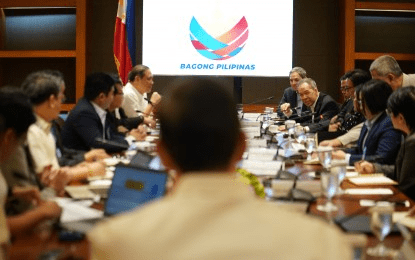
The assurance came during a meeting between Palace officials and oil industry executives at Malacañan Palace in Manila on Thursday to address supply stability and prevent unreasonable fuel price increases.
Executive Secretary Ralph Recto, who led the government delegation with Energy Secretary Sharon Garin, described the talks as “productive.”
“The meeting focused on supply and prices, on how to keep both stable, amidst the volatility we are seeing,” Recto said in a statement.
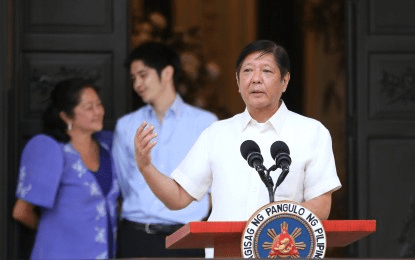
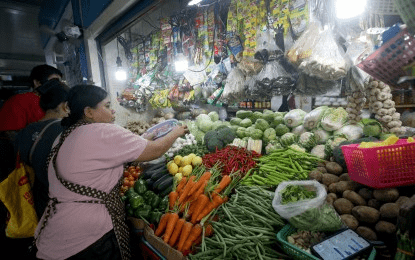
Recto said the discussions were held in line with President Ferdinand R. Marcos Jr.’s directive to mitigate the impact of rising oil prices on consumers.
He noted that the President has already certified as urgent a proposed measure allowing the suspension or reduction of excise taxes on petroleum products during economic emergencies.
“The President wants the bill on his desk immediately so he can sign it,” Recto said.
Recto said the government is also pursuing other interventions, including an energy conservation campaign and lifeline subsidies for transport groups affected by rising fuel costs.
He said the meeting also addressed potential supply chain disruptions due to geopolitical tensions affecting global oil markets.
“Thankfully the companies gave the assurance that whatever operational challenges in bringing the products here are manageable,” he said.
Recto added that the government is exploring alternative supply sources in case the conflict in the affected region worsens and constrains global oil supply.
“This is the kind of oil diplomacy that oil executives and the government will have to jointly undertake,” Recto said. “The major issue that must be addressed proactively in a crisis that is very, very dynamic is the supply chain disruptions.”
In the meantime, Garin reminded oil companies to ensure that pump price adjustments reflect actual market conditions.
She warned that premature, excessive, or unreasonable increases in fuel prices would not be tolerated and would be dealt with accordingly.
Recto emphasized the importance of cooperation between the government and the private sector in easing the impact of global oil market disruptions.
Meanwhile, Senate Minority Leader Alan Peter Cayetano said Friday that Marcos’ certification as urgent of a House bill allowing the temporary suspension or reduction of excise taxes on fuel shows the government’s readiness to respond quickly when global events push oil prices higher and affect Filipinos.
Cayetano said this reflects the need for swift action to cushion the impact of rising fuel prices, noting that the House proposal addresses concerns raised in Senate Bill 1927, which he filed with Senator Pia Cayetano.
“Let’s not miss opportunities. I don’t think there’s a problem that we expect the worst or prepare for the worst. Pagka inubo ang Middle East, nagkakahika ang buong mundo (When the Middle East coughs, the whole world suffers asthma),” he said.
House Bill 8418 allows the President to suspend or reduce excise taxes on fuel products for up to six months. The authority granted under the measure may be exercised until Dec. 31, 2028.
Meanwhile, the Senate proposal seeks to establish a mechanism that would automatically allow the suspension or reduction of fuel excise taxes when global oil prices reach a critical level.
The measure proposes amendments to Section 148 of the National Internal Revenue Code of 1997, as amended by the Tax Reform for Acceleration and Inclusion (TRAIN) Law.
Under the Senate bill, the President may suspend or reduce excise taxes on fuel through an executive order once the average Dubai crude oil price, based on the Mean of Platts Singapore, reaches USD80 per barrel for one month, upon recommendation of the Development Budget Coordination Committee.
The suspension or reduction would automatically be lifted once global oil prices fall below the threshold. (With Wilnard Bacelonia/PNA)