ESPRESSO MORNINGS
By Joe Zaldarriaga
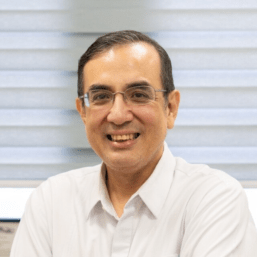
He was the architect behind Meralco’s most celebrated milestones in the field of communications— steering the company to five-time Company of the Year honors at the Philippine Quill Awards and leading the only PR team ever named Team of the Year in the history of the Anvil Awards.
Manong Joe’s leadership also extends as a respected member of the Board of Trustees for the Public Relations Society of the Philippines (PRSP), concurrent with his role as Chairman of the International Association of Business Communicators Philippines (IABC Philippines) where he also served as its President.
Manong Joe is a distinguished awardee of the medallion of honor and scroll of commendation from the University of Manila, owing to his years in public service as a communications professional. He shares his insights through columns in renowned publications, including The Philippine Star’s The Z Factor, and Philippine News Agency’s ESPRESSO MORNINGS.
When Wilson Lee Flores invited me to join a panel of historians at the Pandesal Forum, I immediately said yes. It was an opportunity not only to share my lineage but also to highlight how history continues to shape the present. I brought with me two books: Lost Graves, Found Lives, written by my cousin Agapito Del Rosario and Dr. Rosario Cruz Lucero, my literature professor in De La Salle University and, as I later discovered, my aunt.
I also carried a book about Pedro Abad Santos, authored by Huk Supremo Luis Taruc, a rare volume without publication details, perhaps self-funded by the Supremo himself. These works were more than references; they were reminders that history is not a distant archive but a living context for our society today.
I introduced myself to the audience with pride: Ako po si Agapito Del Rosario Zaldarriaga, anak ni Cristina Baby Sicangco Del Rosario Zaldarriaga, apo ako ni Agapito Abad Santos Del Rosario. My grandfather, Tatang Pitong, was a former mayor of Angeles, Pampanga, a founder of the Partido Sosyalista ng Pilipinas, and one of the early members of Upsilon Sigma Phi in the University of the Philippines. His wife, my grandmother Felicidad “Feleng” Sicangco Del Rosario, became Kumander Sisa, the lone amazona of the Huk movement, after being widowed during the Japanese Occupation. She led guerrillas, negotiated with American forces, and helped stabilize Angeles after the war. Their lives were not just family stories – they were chapters in the nation’s struggle.
The deeper discussion at the forum, however, centered on the Philippine-American War. My great-grandfather Kapitan Isabelo Del Rosario, known as Kapitan Bikong, was executed in 1901 for refusing to surrender to American forces. His final act of defiance, playing Danza Habanera de Filipinas on his violin before smashing it to the ground, was a powerful symbol of resistance. He was only 22 years old, yet his sacrifice continues to resonate.
Why is this important? Because this war was not simply a change of rulers. It was a truthful but brutal assertion of power that shaped our nation, our political systems, the many institutions in the country, and our very society. To forget our past is to put aside the struggles and sacrifices of many Filipino martyrs and heroes like Kapitang Bikong, in claiming the freedom millions of Filipinos are enjoying today.
This is why history matters. It provides context to our current state of society. When we look at the challenges we face today – inequality, political polarization, questions of sovereignty – we must understand that these are not isolated issues. They are rooted in historical struggles. The colonial experience, the resistance movements, the sacrifices of leaders like Kapitan Bikong, Tatang Pitong, and Kumander Sisa – all of these explain why Filipinos continue to value freedom, why labor movements persist, and why debates about justice and governance remain national issues. Without history, we risk misinterpreting the present as disconnected, when in fact it is deeply continuous.
In my family, resistance was a recurring theme. Kapitan Bikong fought the Americans. Tatang Pitong resisted the Japanese. Kumander Sisa led guerrillas in Central Luzon. Each of them chose sacrifice over comfort. Their choices remind me that courage is not confined to battlefields. It can live in civic life, in institutions, and even in the work of communication.
As a professional communicator, I bring with me their advocacies in the modern world. In times of crisis, communication becomes a bridge between institutions and the public. It is not enough to speak; one must explain. It is a service that draws strength from history, because history teaches us that clarity and truth are essential to survival.
Beyond my professional life, I have chosen to advocate for those often unheard. Through my social media channel, Manong Joe, I write about the welfare of senior citizens, a cause close to my heart, now that I am 62. I also support animal welfare, convinced that compassion for all living beings reflects the values of a society. These may not look like revolutions, but they are struggles for dignity and justice in everyday life.
History is not just about dates and battles. It is about choices – choices to resist, to serve, to build. And in remembering them, we gain the context to understand our present and the responsibility to shape our future.