By Darryl John Esguerra
MANILA – The Philippines is set to manufacture its first locally produced hybrid electric vehicles (HEVs) after Mitsubishi Motors Corp. (MMC) announced plans to establish a dedicated production line in its Santa Rosa, Laguna plant.
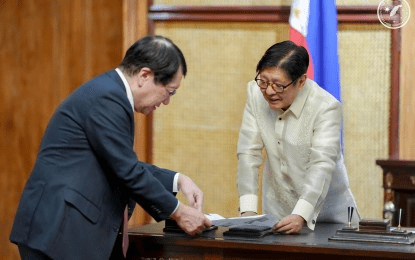
MMC President and Chief Executive Officer Takao Kato relayed the plan during a meeting with President Ferdinand R. Marcos Jr. and Finance Secretary Frederick Go in Malacañang on Monday, signaling strong investor confidence in the Philippine economy.
“This is a landmark investment that will redefine the future of our automotive industry. And the even more exciting possibility is that we could be an exporter of hybrid cars,” Go said, as quoted in a news release.
The project, to be implemented through Mitsubishi Motors Philippines Corp., will accelerate the localization of advanced vehicle manufacturing while supporting the country’s push for cleaner transport and higher-value industries.
By producing HEVs locally, the Philippines is expected to reduce dependence on imported fuel and cut urban emissions, in line with the Electric Vehicle Industry Development Act, which promotes the adoption and manufacture of electric and hybrid vehicles.
MMC is also studying the potential to export hybrid vehicles from its Laguna facility, positioning the Philippines as a possible hub for next-generation automotive production in the region.
Marcos welcomed the development, noting its broader economic impact.
“Met with Mitsubishi Motors Philippines and global CEO Takao Kato to bring hybrid and electric vehicle production closer to home,” he said in a social media post.
“Their continued investment reflects strong confidence in our economy. More jobs, less dependence on fuel, lower costs for drivers and more options for every Filipino,” he added.
The Board of Investments is finalizing the Electric Vehicle Incentives Strategy program to attract more investments in the sector, subject to approval by the Fiscal Incentives Review Board and the President. (PNA)