By Raymond Carl Dela Cruz
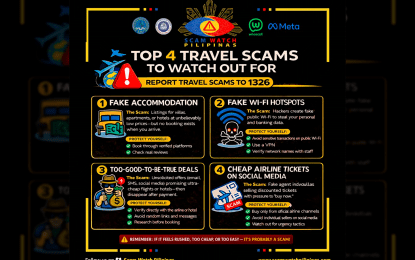
MANILA – Scam Watch Pilipinas (Scam Watch PH) on Monday warned the public against the most common travel scams in the country ahead of the Holy Week exodus beginning Maundy Thursday.
In a statement, Scam Watch PH co-founder Jocel de Guzman said rising oil prices are pushing air fares higher, creating a surge in travel-related scams targeting Filipinos who are searching for cheaper options.
“These scams are designed to create urgency and lower your guard. If you’re being rushed to pay or the price is far below market, that’s already a red flag,” De Guzman said.
One of the most common travel scams during this season is fake accommodations — hotel rooms or any accommodation that are offered at unusually low prices that turn out to be non-existent.
“Travelers are advised to book only through verified platforms, check real reviews, contact the hotel directly before paying, and transact using official travel apps instead of website-based URLs,” he said.
Another common scam is fake Wi-Fi hotspots in airports, hotels and other tourist areas that are used by cybercriminals to steal personal and banking information from users.
“The public is urged to avoid sensitive transactions on public Wi-Fi, use a VPN, and verify network names with staff,” he said.
On the other hand, there are also “too-good-to-be-true” travel deals that are sent via email, SMS, or social media that offer heavily discounted flights or travel packages that are non-existent.
“Consumers should verify directly with airlines or hotels, avoid random links and messages, research providers before booking, and use official travel apps when transacting,” he said.
Lastly, he warned against unauthorized individuals or agents who sell cheap airline tickets on social media, especially those who pressure victims into immediate transactions outside official airline channels.
“Travelers are reminded to buy only from official airline channels, avoid individual sellers on social media, watch out for urgency tactics, and use official airline or travel apps for bookings,” he said.
Aside from watching out for these four top scams, he advised the public to adopt a “Kontra Scam Attitude” by avoiding rushed payments and being cautious with money; verifying deals directly with airlines, hotels, or legitimate platforms; ignoring suspicious messages, links, or unsolicited offers; and reporting suspicious offers or incidents to the national anti-scam hotline 1326.
“Awareness is our strongest defense. As travel costs rise, verification and vigilance become even more critical,” he said.
Holy Week or “Semana Santa,” is an annual religious observance that begins on Holy Monday until Easter Sunday.
Both Maundy Thursday and Good Friday are regular holidays, while Black Saturday is a special (non-working) holiday in the country. (PNA)