By Joyce Ann L. Rocamora
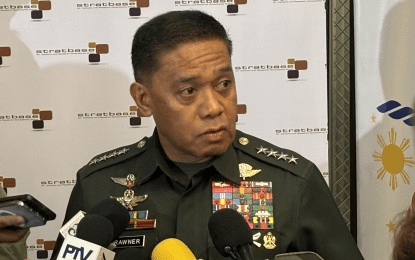
MANILA – Japan is sending “combat troops” to participate in the upcoming 2026 Balikatan exercises in the Philippines, Armed Forces of the Philippines (AFP) chief Gen. Romeo Brawner Jr. said Tuesday.
The official, who made the confirmation at a Stratbase ADRI forum in Makati City, said the deployment signals an important development in the two nations’ growing security cooperation.
“After 1945, for the very first time, we will have again Japanese combat troops on Philippine soil. That is very significant because back then we found ourselves on the opposite sides of the war, but this time, we find ourselves on the same side,” he said.
“Together with the United States, with Australia, these four nations will come together to exercise defensive operations.”
Brawner said Tokyo’s participation in the annual exercise over the past years was limited to the deployment of Japanese trainers on humanitarian assistance and disaster relief rescue.
In the same forum, Japanese Ambassador to the Philippines Endo Kazuya confirmed that the Philippines will see “strengthened participation” of the Japanese Self-Defense Forces in the upcoming joint exercises in the country beyond Balikatan.
Endo described this expanded participation as “very natural” against the backdrop of the two countries’ ramped up efforts to strengthen their bilateral security partnership.
“I think the 70 years of friendship goes way back to the previous history of our relationship, and we should always be aware of those long history of our relationship, not only the 80 some years, but also hundreds of years of collaborations between the two countries,” he said.
“Our current relationship is based on all those relationships,” he added.
AFP NEO activities not aimed at any nation
As this developed, Brawner clarified that the non-combatant evacuation operations (NEO) being conducted by the AFP are not aimed at possible threats coming from any nations.
“NEO exercises are part of military operations done worldwide,” he told journalists in a separate interview.
Likewise, Brawner said these kinds of drills are being undertaken by the AFP even before the outbreak of conflict in the Middle East.
Meanwhile, the AFP chief said, for the moment, the most cost-efficient means to repatriate overseas Filipino workers (OFWs) from the Middle East is through commercial airlines.
He said this alternative is cheaper and faster than sending ships as these missions would entail the use of a lot of fuel.
“Or if we send our C-130s, mas magastos po yun kaysa sa mga (it is more expensive than) commercial airlines,” he added. (With a report from Priam F. Nepomuceno/PNA)