By Sarwell Meniano
TACLOBAN CITY – Livelihood activities supported by the Department of Social Welfare and Development (DSWD) have transformed women in Eastern Samar from traditional housewives into community entrepreneurs, officials reported Monday.
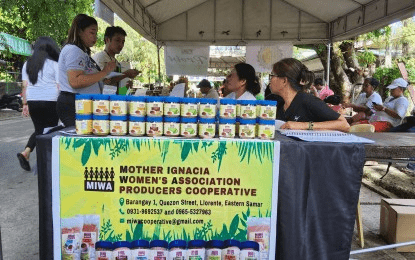
As beneficiaries of the DSWD’s Sustainable Livelihood Program, the 22 members of the Mother Ignacia Women’s Association in Llorente, Eastern Samar, now enjoy stable income through the processing and marketing of herbal products. For over a decade, the group has been producing turmeric powder, ginger tea, banaba tea, and turmeric-based beverage mixes.
Through livelihood support and training from DSWD and other government agencies, the association now earns around PHP30,000 in monthly sales, helping sustain members’ households, according to 58-year-old MIWA vice chairperson Vilma Pua, a mother of six.
“More than earning, our experiences selling in trade fairs in Tacloban, Cebu, and Metro Manila were organized by the government, where we met buyers and other exhibitors. It builds our confidence,” Pua told the Philippine News Agency.
Another women’s group assisted through DSWD’s SLP is the Agri-Producers Women Association in Barangay San Pablo, Taft, Eastern Samar, with 15 members. The association produces eggs, brooms, rice, coffee, and other farm products, collectively raising more than 200 chickens and producing about seven trays of eggs daily, with proceeds distributed among members.
“Even though we are women, we can still earn for our family. We are not too dependent on our husbands. We are not just staying home since we are part of income-generating activities,” said Corazon Loyaga, a mother of three.
The association also practices an annual contribution system that allows members to receive financial returns every December.
“Previously, members received PHP5,000 each, but the amount increased to PHP6,000 last year, reflecting the group’s growing productivity,” she added.
Loyaga thanked DSWD for implementing the SLP, as it opened doors to new opportunities and fostered economic independence among the women.
Support from the SLP and partner agencies such as the Department of Labor and Employment, the Department of Trade and Industry, and the Department of Science and Technology has helped these associations improve product packaging, expand production, and reach broader markets.
The SLP is a capacity-building program for poor, vulnerable, and marginalized households and communities, providing interventions to improve participants’ socio-economic conditions through access to necessary assets for thriving livelihoods. (With reports from Princess Jean C. Calderon, Jermae A. Capuyan & Kent Dulosa, OJTs/PNA)