By Wilnard Bacelonia
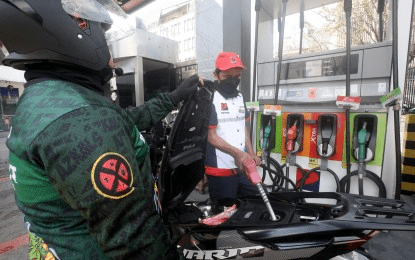
MANILA – Senators are pushing measures to cushion the impact of rising global oil prices, including giving President Ferdinand R. Marcos Jr. the authority to reduce fuel taxes and releasing subsidies earlier for transport and agriculture workers.
Senator Francis Escudero said the Tax Reform for Acceleration and Inclusion (TRAIN) Law should be amended to automatically allow the President to suspend or lower excise and value-added taxes (VAT) on petroleum products when global prices exceed the Dubai crude benchmark used in the government’s Budget of Expenditures and Sources of Financing.
“The law should be amended to automatically give the President that power to suspend or lower excise and VAT rates when prices exceed the estimated range of Dubai crude oil based on the BESF, which guides government budget assumptions,” Escudero said.
“Government cannot enjoy a windfall in excise taxes at the expense of the public because of the increase in prices brought about by force majeure,” he added.
Escudero made the proposal after Marcos said he would seek emergency powers from Congress to reduce excise taxes on petroleum products if Dubai crude reaches USD80 per barrel.
Meanwhile, Senator Raffy Tulfo urged government agencies to release fuel subsidies for transport and agriculture workers before global oil prices reach the same threshold.
Tulfo, chairperson of the Senate Committee on Public Services, held an online coordination meeting with the Department of Transportation, the Department of Energy, the Department of Agriculture, and the Bureau of Fisheries and Aquatic Resources to monitor programs addressing the impact of rising fuel costs amid tensions in the Middle East.
“Dahil sa kaguluhan sa Middle East, siguradong may impact ito sa presyo ng langis. Marami nang gasolinahan ang pinayagang magtaas ng presyo. Ang concern ko, lubhang maaapektuhan din ang mga PUV drivers, farmers, fisherfolks. Anong programa mayroon ang gobyerno para maaddress ang isyung ito para makatulong sa kanila (Because of the unrest in the Middle East, this will surely affect oil prices. Many gasoline stations have already been allowed to raise prices. My concern is that PUV drivers, farmers and fisherfolk will be heavily affected. What programs does the government have to address this issue to help them?),” Tulfo said.
He also questioned the policy requiring Dubai crude prices to reach USD80 per barrel before fuel subsidies are released.
“Matagal ko nang sinasabi ito, bakit kailangan pang hintayin na pumalo sa USD80 ang presyo ng Dubai crude oil sa World Market bago ibigay ang fuel subsidies sa mga tsuper, riders, magsasaka at mangingisda samantalang bago pa man tumaas ito ay pinapayagan na nating tuloy-tuloy na magtaas ng presyo ang mga kumpanya ng langis (I have long been saying this: why do we have to wait for Dubai crude oil prices in the world market to hit USD80 before giving fuel subsidies to drivers, riders, farmers and fisherfolk when oil companies are already allowed to continuously raise prices even before that?),” he added. (PNA)